
What to Expect During an In-Lab Sleep Study
Sleeping somewhere new with sensors attached can feel unusual, and that is completely normal. Our goal is to make your overnight sleep study as comfortable as possible while collecting the information needed to better understand your sleep. This is an important diagnostic test used to evaluate breathing, sleep patterns, and other signals while you rest.
Step 1: Before You Arrive

Preparing for your sleep study is simple, but a few steps will help ensure accurate results.
Before your appointment:
Shower and arrive with clean, dry hair (this helps sensors adhere better)
Avoid hair products (sprays, gels, oils)
Avoid lotions or creams on your face and body
Do not nap the day of your study
Avoid alcohol all day and avoid caffeine after 2:00 PM
What to bring:
Photo ID
Insurance card(s)
Comfortable two-piece sleepwear
Medications you may need overnight
Any requested paperwork

Step 2: Arrival and Check-In

You will arrive at the sleep center in the evening and be welcomed by one of our sleep technicians.
What to expect:
Brief check-in and review of your information
Orientation to the sleep study process
A private room for your overnight stay
Time to ask questions and get comfortable
Step 3: Getting Set Up
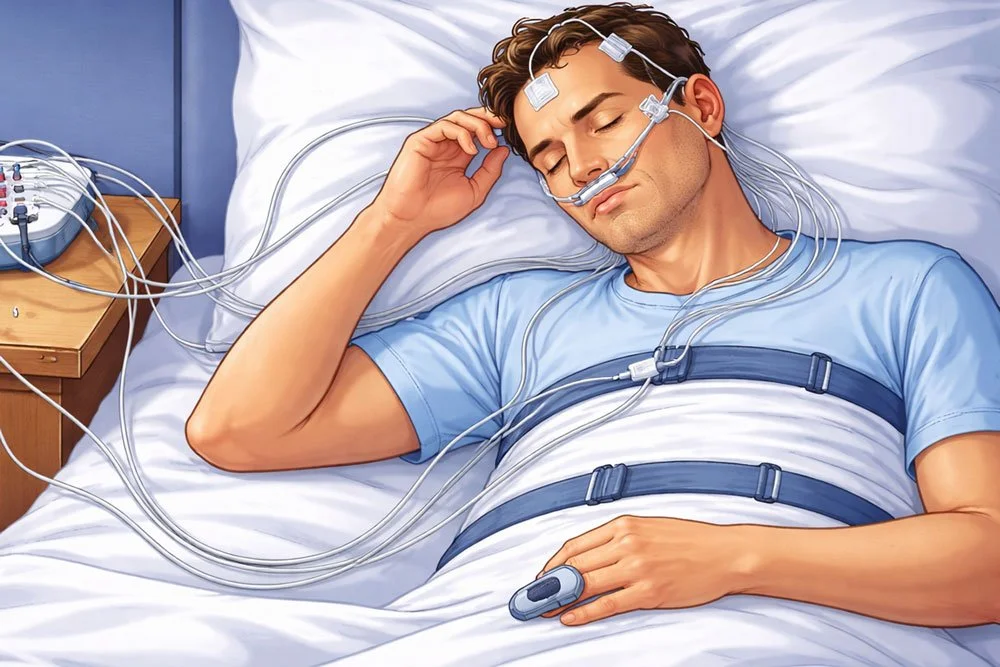
Before you go to sleep, your technician will place small sensors on your body to monitor your sleep.
Sensors are typically placed on:
Scalp and face
Chest and abdomen
Legs
Finger (for oxygen levels)
Near your nose (to measure airflow)
We monitor:
Brain activity and sleep stages
Breathing patterns
Oxygen levels
Heart rate and rhythm
Body movement
The setup is not painful. The wires are lightweight and designed to allow you to move comfortably in bed.
Step 4: The Sleep Study
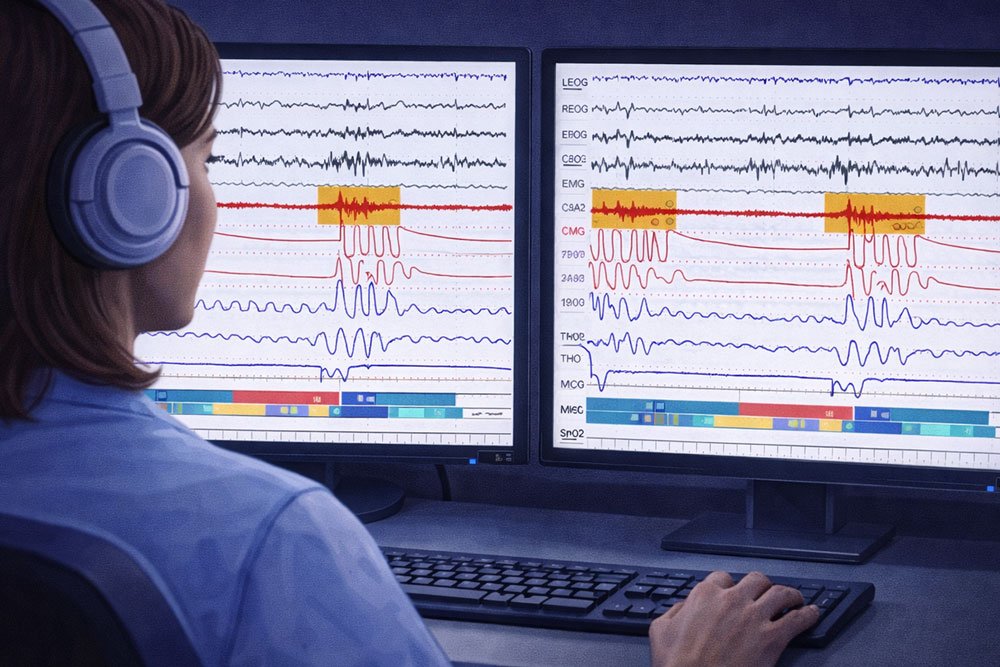
Once you are ready for bed, the study will begin.
During your study:
A technician monitors your sleep from a nearby room
You can communicate with your technician at any time
You can get up if needed
Adjustments can be made if something feels uncomfortable
The sleep study needs to run for 6 hours (not necessarily the amount of actual sleep). Even if you don’t feel like you slept perfectly, most patients sleep enough for us to gather the information we need.
If Treatment is Started During the Test
Sometimes part of the study includes treatment for breathing problems during sleep. This is called a titration.
If needed, you may:
Be fitted with a mask connected to a PAP device
Receive gentle air pressure to help keep your airway open
Try different mask options for comfort and fit
Your technician will guide you through this process and answer any questions.
Step 5: After Your Study

In the morning, your study will be complete and you’ll be able to head home shortly after.
After your visit:
Sensors are removed by your technician
You may be asked to complete a short follow-up form
Your data is reviewed by a sleep specialist
Results are typically shared with your provider within a couple of weeks
Your Sleep Study is Complete
Your provider will review the results with you and discuss any recommended next steps.

Frequently Asked Questions
-
No. The sensors are applied gently and are designed to be comfortable.
-
We provide everything needed. Outside bedding is typically not permitted.
-
This is very common. Most patients still sleep enough for us to collect useful data.
-
Yes, you can communicate with your technician if you need assistance.
-
Most locations do not have showers, so you may prefer to shower at home afterward.
-
Yes, even if your sleep feels different than usual, we are typically able to collect enough information to accurately assess your sleep patterns and breathing.